
From Quiet Resignations to Impeachments: Mapping Five Years of Judicial Turnover
This publication is intended for documentation and future reference, offering a consolidated account of publicly available information.
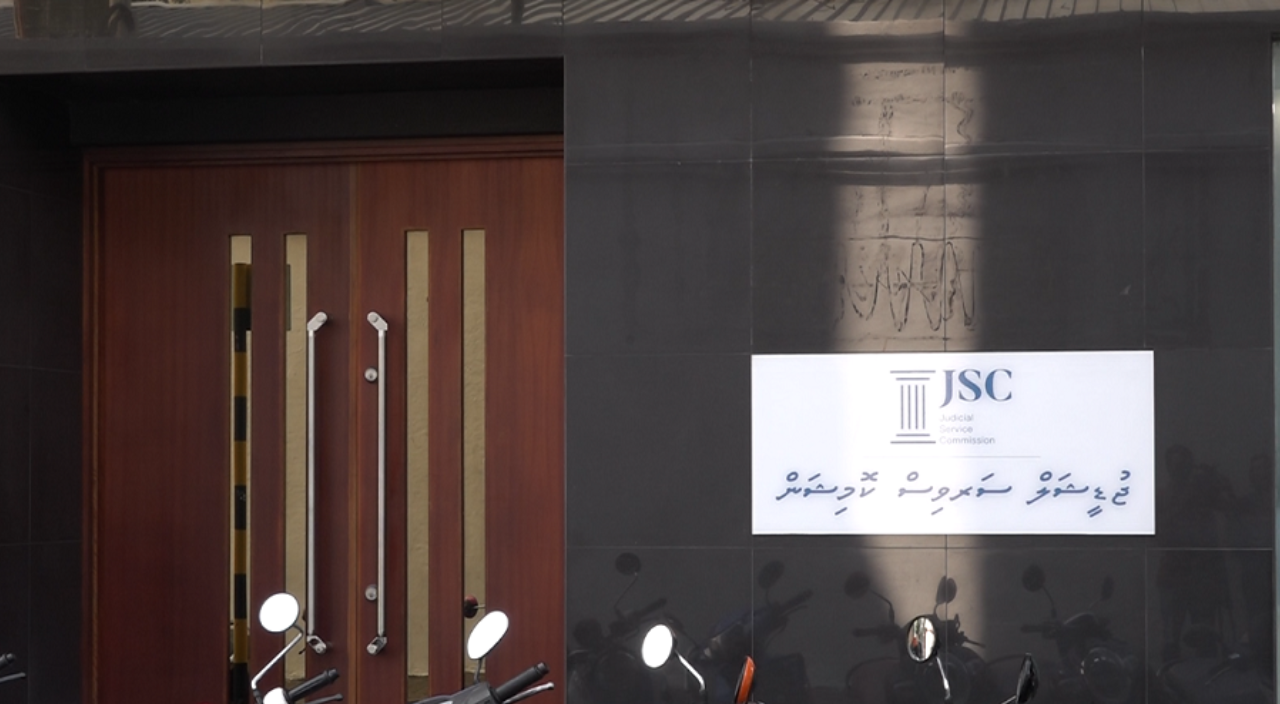
This article documents one of the most active phases of judicial turnover in recent Maldivian history. Between 2021 and 2025, a total of 11 exits occurred across the Superior Courts, spanning the Civil Court, Criminal Court, High Court, and Supreme Court of the Maldives. In each case, the departure was preceded by a Judicial Service Commission (JSC) investigation or formal allegation of misconduct.
Year-by-Year Overview
2021
The period begins with the resignation of a Criminal Court judge. Judge Ismail Rasheed faced JSC proceedings after the commission alleged he had violated the Criminal Procedure Act and failed to act in an independent manner. The JSC forwarded the case to the People’s Majlis Judiciary Committee for consideration of removal. Judge Rasheed resigned, denying the allegations against him.
2022
This was the most active year prior to 2025. Four judicial exits occurred; three resignations and one parliamentary removal, all arising from JSC investigations.
High Court:
The JSC investigated three High Court judges; Judge Ali Sameer, Judge Abdul Rauf Ibrahim, and Judge Abdulla Hameed, over allegations that they had accepted government-issued apartments at preferential prices in exchange for favourable rulings, in violation of Article 152 of the Constitution. Judge Ali Sameer resigned during the JSC inquiry. Judge Abdul Rauf Ibrahim resigned on 31 May 2022, while parliamentary dismissal proceedings were underway. Judge Abdulla Hameed did not resign; Parliament voted to remove him, with 58 members in favour and seven against, meeting the two-thirds majority of members present and voting required to remove a judge under Article 154 of the Constitution.
Civil Court:
The Civil Court recorded one departure. Judge Zubair Mohamed resigned in 2022, though the precise grounds for his departure have not been made clear. It was reported that a JSC investigation was ongoing at the time of his resignation.
2023 & 2024
No resignations or removals were recorded in 2023 or the first half of 2024. However, the latter stages of 2024 marked the beginning of the most consequential period of judicial upheaval in the dataset.
2025
The final year in the dataset represents the most dramatic shift. Six judicial exits occurred across three courts, including two Supreme Court impeachments, a high-profile protest resignation, two High Court departures amid active JSC investigations.
Supreme Court:
On 25 February 2025, the JSC suspended three sitting justices; Justice Dr. Azmiralda Zahir, Justice Mahaz Ali Zahir, and Justice Husnu Al Suood citing disciplinary issues and an ongoing Anti-Corruption Commission investigation. The suspensions occurred minutes before a scheduled Supreme Court hearing on a stay order in Ali Hussain v. State [2024/SC-C/02], the constitutional challenge to the Sixth Amendment. With three justices suspended, the court lacked the full bench required under law to hear constitutional cases, effectively paralyzing proceedings.
On 4 March 2025, Justice Husnu Al Suood resigned in protest. In a public statement, he accused the administration of exerting undue influence over the judiciary to sway the outcome of the anti-defection case.
On 14 May 2025, Parliament voted to remove Justice Dr. Azmiralda Zahir and Justice Mahaz Ali Zahir following a JSC referral, with 68 members voting in favour and 11 against. Both justices rejected the findings as politically motivated. Justice Azmiralda described her dismissal as “an attack on the entire judiciary.” The removals drew widespread international concern, with organizations including LAWASIA, the Commonwealth Lawyers Association, and UN Special Rapporteur Margaret Satterthwaite calling for the reinstatement of the judges.
High Court:
In November 2025, the JSC announced disciplinary proceedings against five sitting High Court judges. Judge Mohamed Faisal the most senior serving judge on the bench and former interim Chief Judge of the High Court resigned on 22 November 2025 amid the active JSC investigation. Judge Mohamed Niyaz, the longest-serving judge on the High Court bench, filed for retirement while simultaneously facing multiple pending disciplinary cases. The JSC accepted his retirement request, though investigations into his conduct continued.
Criminal Court:
On 3 December 2025, Parliament voted to remove Judge Hussain Faiz Rashaad from the Criminal Court bench, with 56 members in favour and 8 against. The JSC had recommended his removal after concluding that he had acted in violation of the Constitution and relevant laws by unconditionally releasing a suspect accused of drug trafficking who was in remand custody. This marked the only lower court impeachment of the period under review.
Conclusion
The five years covered in this article were notably active. But they were not the only period in which judicial exits and executive intervention occurred, nor the first.
Similar events predate the window documented here. In January 2012, the government ordered the military to arrest Criminal Court Chief Judge Abdulla Mohamed; the Supreme Court, the Prosecutor General, and the JSC each declared the detention unlawful. In December 2014, Parliament amended the Judicature Act to reduce the Supreme Court from seven justices to five, and Chief Justice Ahmed Faiz and Justice Muthasim Adnan were removed within days. In February 2018, a state of emergency was declared and Chief Justice Abdulla Saeed and Justice Ali Hameed were detained, after which the remaining Supreme Court bench was removed or replaced between 2018 and 2019.
The focus of this article on 2021 to 2025 reflects a deliberate choice to document a discrete, verifiable set of departures across the Superior Courts during a defined period. It does not suggest these were the only such instances. Judicial exits preceded by investigation, removal, or executive action have recurred across earlier years as well, and the period documented here is one record among several.
Whether the current composition of the courts will prove more stable than those that preceded it remains to be seen.